

ClinicalTrials.gov ID:NCT06856174
Brief Summary
Menopausal Hormone Therapy for Women Living with HIV (HoT)
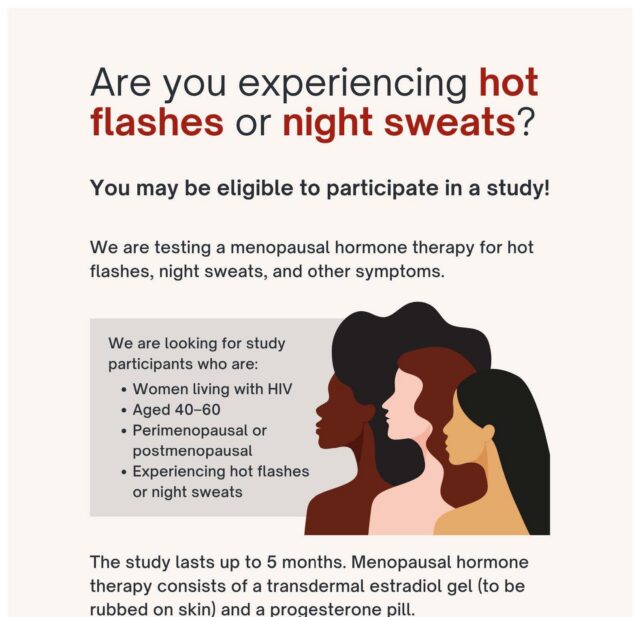
Women living with HIV have been shown to experience more frequent and severe hot flashes and night sweats (collectively known as vasomotor symptoms) as compared to women living without HIV. This correlates with disturbed sleep, increased depressive symptoms, increased anxiety, worse mental function, interference with activities of daily living including work, and worse overall quality of life.
Hormone therapy is considered to be the most effective therapy for hot flashes and night sweats and the most appropriate choice to prevent bone loss at the time of menopause for women without HIV. However, the usefulness of hormone therapy has not been specifically studied in women living with HIV.
This trial is being done to see if:
- There is evidence to support the use of hormone therapy (estradiol with or without progesterone) for the treatment of hot flashes and night sweats in women living with HIV
- Hormone therapy improves mental function, mood, sleep, quality of life, bone health, heart health, and inflammation in women living with HIV
- Hormone therapy is safe and tolerable for women living with HIV
This is a two-group study, where enrolled women living with Human Immunodeficiency Virus (HIV) on antiretroviral therapy (ART) will receive study medication called “Hormone replacement therapy (HT; estradiol gel with or without oral progesterone)” Or Placebo. Placebo is an inactive substance that looks the same as the treatment, like a “sugar pill”.
Eligible participants will be enrolled in Part 1; all participants will not receive treatment for the first 3 (and up to 5) weeks of the study and during this time they will complete a daily diary. If deemed eligible to move forward following completion of the daily diary in Part 1, participants will enter Part 2 during which they will receive treatment (study medication or placebo) and complete a daily diary for 12 more weeks.
- Location:
- Torrance
- Status:
- Recruiting
- Study Type:
- Interventional
- Phase:
- 4
